
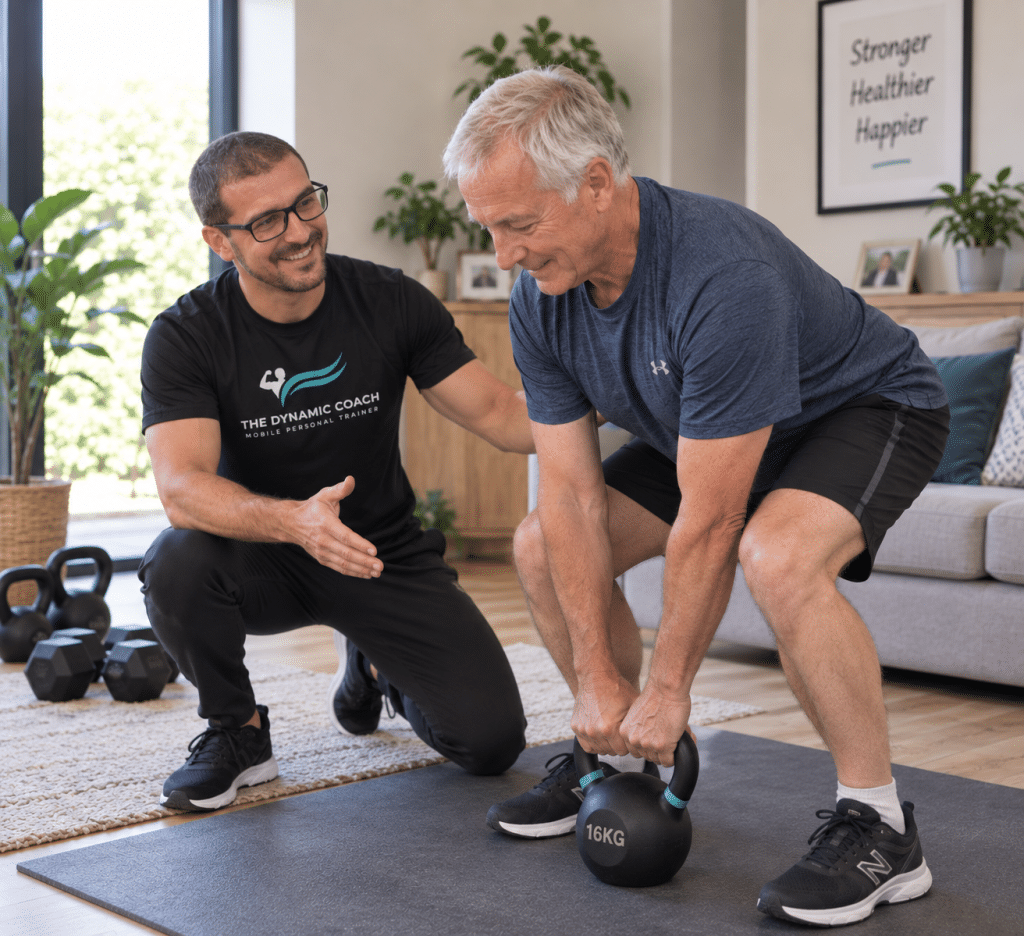
Starting strength training can feel confusing. You might know that lifting weights is good for you, but still feel unsure about which exercises to choose, how heavy to lift or whether you’re doing anything correctly.
Perhaps you’ve tried following online workouts, only to find that they move too quickly or include exercises that don’t suit you. You might also prefer exercising at home rather than walking into a busy gym.
As a home personal trainer Radlett residents can work with around their everyday commitments, I aim to make getting started straightforward.
You don’t need an expensive home gym or an exhausting programme. You need an appropriate starting point, a few useful exercises and a routine you can repeat.
Here’s how I recommend approaching your first steps into strength training.
1. Understand What Strength Training Involves
Strength training means making your muscles work against resistance. That resistance might come from dumbbells, kettlebells, bands, machines or your own body weight.
It doesn’t have to involve heavy barbells. Standing up from a chair, performing a wall press-up or lifting a manageable dumbbell can all provide a starting point.
The important thing is choosing an exercise that challenges your current ability while allowing you to remain in control.
The NHS recommends muscle-strengthening activities on at least two days each week. These should work the major muscle groups, including your legs, hips, back, abdomen, chest, shoulders and arms. NHS
I help clients turn that broad advice into something practical: exercises they understand, sessions they can manage and a clear idea of what to do next.
2. Decide What You Want Training to Help With
Before choosing exercises, think about why you want to become stronger.
Perhaps you want to carry shopping more comfortably, feel more confident getting up from the floor or return to activities you’ve stopped doing.
You might want to build muscle, support a weight-management goal or feel more capable during everyday life.
These goals help shape your programme. They also give your training meaning beyond completing a certain number of repetitions.
When someone approaches me as a home personal trainer Radlett clients can train with privately, I want to understand their starting point.
That includes their exercise history, confidence, available time and any health considerations. A useful programme should reflect the person following it.
3. Create a Simple Space at Home
You don’t need to dedicate an entire room to exercise.
A clear area in your living room, spare room or another suitable space may be enough. You should be able to move without catching furniture, slipping on a rug or worrying about something falling over.
Choose a stable surface and keep equipment out of walkways. If you use a chair for support, make sure it’s sturdy and cannot slide away.
I also suggest making your training space easy to prepare. If every session requires moving half the house, getting started becomes another task to put off.
My mobile personal training service brings coaching and portable equipment to you, making home sessions easier to organise.
4. Learn a Few Fundamental Movements
Beginners don’t need a huge exercise library. I prefer starting with a small selection of movements that we can practise consistently.
These might include sitting down and standing up, bending at the hips, pushing, pulling and carrying.
For example, a chair squat introduces a controlled sitting and standing movement. A wall press-up provides a manageable pushing exercise. A supported dumbbell row introduces pulling.
The exact variation depends on your ability. Two people can train the same movement pattern using different exercises.
I’m interested in whether you understand the movement, can control it and feel appropriately challenged.
Learning a few exercises well gives us a stronger foundation than rushing through lots of unfamiliar ones.
5. Start With Manageable Resistance
Choosing your first weights can be difficult because there isn’t one correct starting weight for everyone.
A dumbbell that feels light during a row might feel demanding during a shoulder exercise. Your experience, balance and confidence also affect what’s appropriate.
I usually begin conservatively and observe how the movement looks and feels. You should be able to complete your planned repetitions without rushing or losing control.
You don’t need to discover your maximum strength during your first session.
Working with a home personal trainer Radlett residents can ask questions throughout the workout allows those adjustments to happen as you train.
The aim is to find a useful challenge, rather than prove how much you can lift immediately.
6. Use a Straightforward Beginner Session
For a generally healthy beginner, an introductory session could include the following exercises. This is an example to adapt, rather than a prescription for everybody.
| Exercise | Starting amount |
|---|---|
| Sit-to-stand from a sturdy chair | 1–2 sets of 8–10 repetitions |
| Wall press-up | 1–2 sets of 8–10 repetitions |
| Supported dumbbell row | 1–2 sets of 8–10 each side |
| Glute bridge | 1–2 sets of 8–12 repetitions |
| Standing calf raise with support | 1–2 sets of 10–12 repetitions |
Rest between sets until you feel ready to repeat the exercise with control. Around one to two minutes can be a useful starting point, with longer if needed.
Some people will need fewer exercises, different movements or additional support. Your session should match your current capacity.
7. Warm Up Without Making It Complicated
A warm-up should help you prepare for the exercises ahead.
You might begin with a few minutes of comfortable walking or marching, followed by gentle movements through the ranges you’ll use during the session.
Before squats, practise a few easy sit-to-stands. Before a dumbbell exercise, rehearse the movement without a weight or with a lighter one.
I use this time to check how someone feels that day. Are they unusually tired? Does a movement feel different? Do we need to change the plan?
You don’t need a long, elaborate routine before every workout. You need enough preparation to begin your main exercises feeling comfortable and ready.
8. Give Yourself Time Between Sessions
When you feel motivated, it’s tempting to train hard every day. However, doing more immediately isn’t always the most useful approach.
For many beginners, two full-body sessions on separate days provide a practical routine. You could train on Monday and Thursday, leaving time between sessions.
The National Institute on Aging advises allowing recovery between sessions that train the same muscle groups. National Institute on Aging
Your other activities matter too. Walking, gardening, running and exercise classes all contribute to your week.
As a home personal trainer Radlett clients can discuss their wider routine with, I consider how strength sessions fit alongside everything else. The programme should be challenging enough to progress and manageable enough to repeat.
9. Progress Gradually as Exercises Become Easier
Once an exercise becomes familiar, you’ll eventually need to adjust the challenge.
That might mean performing another repetition, adding a small amount of weight or moving to a more demanding variation.
For example, you might begin with eight controlled chair squats. Over time, you could build to ten, then introduce a light weight if appropriate.
You don’t need to increase everything at once. Small changes make it easier to judge how you respond.
The NHS recommends starting strength exercises gradually and building repetitions over time. NHS
I encourage clients to keep a simple record of their exercises, weights and repetitions. It makes progress easier to recognise and helps us decide what to change next.
10. Adapt Training to Your Age and Needs
You don’t have to reach a particular fitness level before asking for help.
Some clients are complete beginners. Others have trained previously but need a more suitable approach after a long break.
For older adults, I may also consider balance, confidence and the practicalities of getting into different exercise positions.
My personal training for seniors focuses on adapting sessions to the individual, rather than assuming everyone of a similar age needs the same workout.
If you have a medical condition, recent operation or unexplained symptoms, get appropriate healthcare advice before starting.
During exercise, stop if you experience sharp pain, chest pain, dizziness or unusual breathlessness. Those symptoms shouldn’t be treated as a normal training challenge.
11. Focus on Consistency Before Perfection
Your first few weeks are an opportunity to learn.
You might need reminders about your technique or discover that one exercise feels more suitable than another. That’s expected when you’re developing a new skill.
I encourage clients to focus on attending their sessions, practising their movements and understanding their programme.
A shorter workout completed regularly can be a more useful starting point than an ambitious routine you struggle to fit in.
If you miss a session, return to your plan without trying to punish yourself with extra exercise.
Strength training should become a manageable part of your week. Building that routine takes patience, particularly when work, family commitments and everyday responsibilities compete for your attention.
Start Strength Training at Home in Radlett
Getting stronger begins with finding exercises that suit you and practising them consistently.
You don’t need to know everything before your first session. My role is to explain the exercises, adjust the challenge and help you build confidence as you progress.
If you’re looking for a home personal trainer Radlett residents can work with on a personalised programme, I’d be happy to discuss your goals.
Whether you’re starting from scratch or returning after time away, we can identify a manageable first step.
Book your free personal training trial and let’s build a strength-training routine around your ability, your home and your life.