
Professional exercise rehabilitation support for personal injury clients, case managers, solicitors and rehabilitation professionals.
Recovering from a serious injury can be a long and challenging process. Whether someone has been involved in a road traffic accident, experienced an orthopaedic injury, undergone surgery or developed long-term mobility difficulties, rebuilding physical strength, confidence and independence can be an important part of their rehabilitation.
I’m an experienced personal trainer and sports massage therapist with over 15 years of experience helping people improve their strength, mobility and physical fitness.
Through The Dynamic Coach, I provide specialist personal training and exercise-based rehabilitation for individuals recovering from personal injuries across Hertfordshire and Bedfordshire.
I work with clients directly and accept referrals from personal injury case managers, solicitors and other rehabilitation professionals, delivering individually tailored exercise programmes designed to support recovery and improve physical function.
My services are available at clients’ homes and suitable training facilities across Luton, Hitchin, Stevenage, Harpenden, St Albans, Hemel Hempstead, Radlett, Dunstable and Berkhamsted.
Looking to refer a client? Contact The Dynamic Coach to discuss their rehabilitation needs and request a tailored exercise programme.
Following an accident or injury, many people experience a reduction in physical strength, mobility, balance and endurance. These difficulties can affect everyday activities, including walking, climbing stairs, lifting objects, returning to work and participating in hobbies.
While physiotherapy and other clinical treatments may address specific injuries and impairments, supervised strength training and exercise can provide valuable additional support as part of a coordinated rehabilitation programme.
My approach focuses on helping clients gradually rebuild their physical capabilities through safe, progressive and individually adapted exercise.
Depending on the client’s needs, this may include:
Progressive strength and resistance training.
Balance, stability and coordination exercises.
Functional movement and mobility training.
Cardiovascular fitness and endurance development.
Gradual physical reconditioning following inactivity.
Improving confidence with everyday movement.
Developing sustainable exercise habits for long-term physical wellbeing.
Every programme is adapted to the individual’s current abilities, rehabilitation goals and relevant clinical recommendations.
I understand that personal injury rehabilitation is rarely a straightforward process. Some clients experience fatigue, pain, reduced confidence or fluctuating physical capabilities, so programmes need to remain flexible and responsive to their progress.
My role is to provide structured exercise support within my professional scope of practice, working alongside clinical rehabilitation professionals where appropriate.
Road traffic accidents can result in a wide range of physical difficulties, including muscle weakness, reduced mobility, balance problems and general physical deconditioning.
Some individuals may also experience ongoing fatigue, reduced confidence or difficulty returning to their previous activity levels.
I provide individually tailored exercise programmes designed to help clients gradually rebuild strength, physical endurance and functional movement following road traffic accidents.
Sessions may include progressive resistance training, balance exercises, mobility work and cardiovascular conditioning, depending on the individual’s capabilities and rehabilitation objectives.
Fractures, joint injuries, muscle injuries and other musculoskeletal conditions can significantly affect a person’s ability to exercise and perform everyday activities.
Following appropriate medical assessment and clearance, supervised exercise can help individuals rebuild strength, improve movement and regain confidence in their physical abilities.
I can support clients recovering from a range of orthopaedic injuries, including those affecting the shoulders, hips, knees, ankles and other areas of the body.
Programmes are developed around the individual’s stage of recovery and any guidance provided by their physiotherapist, consultant or wider rehabilitation team.
Neurological injuries can affect movement, strength, coordination, balance and physical endurance.
I have experience supporting clients experiencing neurological difficulties following serious accidents, using adapted strength training and functional exercise to work towards agreed physical goals.
Depending on the individual’s needs, exercise sessions may focus on:
Improving muscular strength.
Developing balance and stability.
Supporting coordination and controlled movement.
Improving general fitness and stamina.
Practising functional movements.
Building confidence with physical activity.
Where neurological impairments are present, I work within my qualifications and experience, taking account of relevant clinical advice and collaborating with specialist rehabilitation professionals when appropriate.
Following surgery, individuals may experience muscle weakness, reduced mobility and a decline in their overall physical fitness.
Once medically appropriate, progressive exercise can play a useful role in rebuilding strength and supporting a return to everyday activities.
I provide supervised exercise programmes for suitable clients following surgery, with training adapted to their recovery stage, physical limitations and clinical guidance.
Some clients referred through personal injury claims experience multiple injuries or a combination of physical and neurological difficulties.
These cases often require a coordinated approach involving several rehabilitation professionals.
I can contribute to a multidisciplinary rehabilitation programme by providing structured strength and conditioning, functional exercise and physical reconditioning where appropriate.
Before beginning a programme, I assess whether the client’s requirements fall within my professional competence and whether additional specialist input is necessary.
Extended periods of inactivity following an injury can contribute to reduced muscular strength, cardiovascular fitness, balance and physical confidence.
This can make returning to normal daily activities increasingly challenging.
My exercise programmes aim to help suitable clients gradually rebuild their physical capacity through achievable, progressive training.
The focus is on improving practical abilities that matter to the individual, whether that’s walking further, climbing stairs more confidently, carrying shopping or returning to recreational activities.
I understand that rehabilitation following a personal injury claim often involves multiple professionals working together to achieve the best possible outcome for the client.
Through The Dynamic Coach, I accept referrals from case management companies, personal injury solicitors and other rehabilitation professionals looking for reliable, individualised exercise support.
My aim is to make the referral process straightforward while providing a professional service that complements the client’s wider rehabilitation programme.
Before starting training, I carry out an initial consultation and appropriate fitness assessment to understand the client’s current abilities, limitations and exercise goals.
Where relevant, I review available clinical recommendations and discuss any precautions that may affect exercise participation.
This helps establish realistic objectives and identify the most suitable approach to training.
No two injuries or rehabilitation journeys are the same.
Each client receives a programme adapted to their individual circumstances, with exercises selected according to their current physical abilities, functional requirements and agreed rehabilitation goals.
Training intensity, exercise selection and progression are reviewed regularly to ensure sessions remain appropriate and challenging.
I recognise the importance of documenting progress when working with case managers and other rehabilitation professionals.
Where agreed as part of the referral arrangement, I can provide structured progress updates covering:
Initial exercise capabilities and agreed goals.
Strength and fitness improvements.
Changes in balance, mobility and functional exercise performance.
Exercise participation and tolerance.
Progress towards agreed rehabilitation objectives.
Recommendations for continued supervised exercise.
These reports provide practical information about exercise participation and performance. They are not intended to replace clinical assessments or independent medico-legal opinions.
Good communication is essential when several professionals are involved in a client’s rehabilitation.
With appropriate consent, I can liaise with case managers, physiotherapists, occupational therapists and other relevant professionals to help ensure exercise programmes complement the wider rehabilitation plan.
I welcome guidance regarding specific rehabilitation objectives, exercise precautions and functional goals.
I understand that rehabilitation schedules can change depending on medical appointments, fatigue, treatment requirements and the client’s general wellbeing.
Where possible, I offer flexible scheduling and training arrangements to accommodate these needs.
Sessions can take place at the client’s home or an appropriate training facility, depending on individual requirements and availability.
Travelling to a gym or rehabilitation centre isn’t always practical for someone recovering from a serious injury.
Reduced mobility, fatigue, transport difficulties and other physical limitations can make attending appointments challenging.
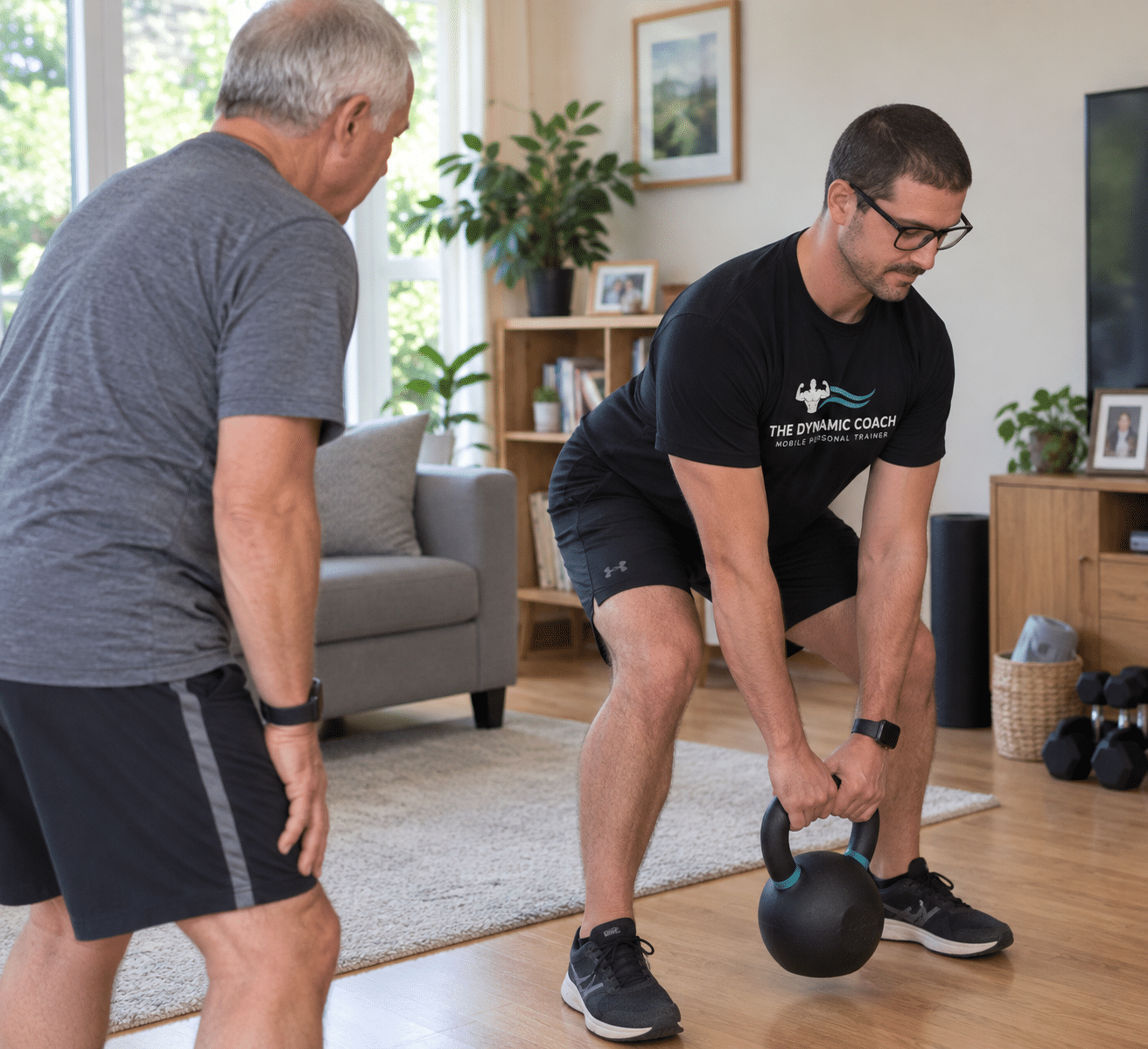
As a mobile personal trainer, I can deliver supervised exercise sessions in the client’s own home, bringing suitable training equipment with me.
Home-based rehabilitation offers several advantages:
Convenience: Clients can exercise without needing to travel to a gym.
Familiar surroundings: Training takes place in an environment where the client may feel more comfortable and confident.
Individual attention: Every session is delivered on a one-to-one basis, allowing exercises to be closely supervised and adapted.
Functional relevance: Where appropriate, exercises can be related to everyday movements and activities within the home.
Progressive training: Sessions can develop alongside the client’s improving physical capabilities.
My aim is to make structured exercise as accessible and practical as possible while maintaining a professional standard of coaching.
Choosing an exercise professional for a personal injury client requires confidence in their qualifications, experience and ability to work with individuals who may have complex physical needs.
I’ve worked in the fitness industry for over 15 years, supporting people with different abilities, backgrounds and exercise requirements.
My qualifications include:
Level 3 Personal Trainer.
Level 3 Sports Massage Therapist.
Strength and Conditioning
My experience includes working with individuals experiencing reduced mobility, balance difficulties, muscle weakness, physical deconditioning and ongoing limitations following accidents.
I understand the importance of patience, appropriate exercise progression and adapting training to suit each individual’s circumstances.
I also recognise the boundaries of my professional role. Where a client’s needs require specialist clinical rehabilitation beyond my qualifications, I will recommend that appropriate healthcare professionals are involved.
My objective is to provide a dependable, supportive and professional exercise service that contributes positively to the client’s wider rehabilitation goals.
The Dynamic Coach provides mobile personal training and exercise-based rehabilitation across Hertfordshire and Bedfordshire.
My main service areas include:
I may also be able to accommodate referrals in surrounding towns and villages, depending on location, availability and individual requirements.
If you’re a case manager or rehabilitation coordinator looking for an exercise professional in Hertfordshire or Bedfordshire, please get in touch to discuss your client’s needs.
I aim to make the referral process straightforward for case managers, solicitors and rehabilitation professionals.
Contact me with a brief outline of the client’s general rehabilitation requirements, location and proposed exercise objectives.
At this stage, detailed medical information is not necessary.
I will discuss the referral requirements, review relevant information through an appropriate secure process and determine whether I can provide suitable exercise support.
Where necessary, I may request additional guidance or clearance from the client’s treating healthcare professionals.
Following the assessment, I can provide a proposed exercise programme outlining recommended session frequency, intended goals and associated costs.
The proposal can be reviewed by the case manager or relevant funding party before sessions commence.
Once arrangements have been agreed, I begin delivering individually tailored exercise sessions.
Training is progressed according to the client’s physical abilities, exercise tolerance and rehabilitation objectives.
Where requested and agreed, I provide progress summaries to help the case manager and wider rehabilitation team review exercise outcomes and consider future training requirements.
Yes. I welcome enquiries from personal injury case managers, solicitors, rehabilitation coordinators and other professionals seeking supervised exercise support for their clients.
All referrals are reviewed individually to establish suitability.
Yes. I recognise the importance of multidisciplinary rehabilitation and can coordinate exercise programmes with the client’s treating professionals, where appropriate and with the necessary consent.
I have experience providing adapted exercise to individuals experiencing neurological difficulties following accidents.
Suitability depends on the client’s presentation, associated risks, clinical guidance and whether the required support falls within my qualifications and competence.
Yes. I provide mobile personal training across Hertfordshire and Bedfordshire, bringing appropriate exercise equipment to the client’s home.
Yes. Progress reporting can be included as part of an agreed rehabilitation exercise programme.
Reports may include strength measurements, exercise performance, functional goals and other relevant observations.
This depends on the client’s individual requirements, rehabilitation goals, physical capabilities and relevant clinical recommendations.
Following an assessment, I can recommend an appropriate training frequency for consideration by the client and case manager.
Yes. I can provide quotations for individual sessions or blocks of supervised training based on the client’s requirements, session frequency and location.
Yes. I work with suitable clients experiencing ongoing weakness, reduced mobility, physical deconditioning and other limitations following injury.
The programme is tailored to the individual’s current abilities and long-term goals.
If you’re a personal injury case manager, solicitor, rehabilitation coordinator or healthcare professional looking for specialist exercise support for a client, I’d welcome the opportunity to discuss their requirements.
With over 15 years of experience in personal training and the flexibility to provide home-based sessions, I aim to deliver a professional, individualised service that supports each client’s rehabilitation goals.
Whether your client is recovering from a road traffic accident, orthopaedic injury, neurological injury or another form of personal injury, I can discuss whether supervised exercise would be a suitable addition to their rehabilitation programme.
Contact The Dynamic Coach today to discuss a referral, check availability or request a personalised rehabilitation exercise proposal.
Refer a Client | Request a Rehabilitation Proposal